Broadside
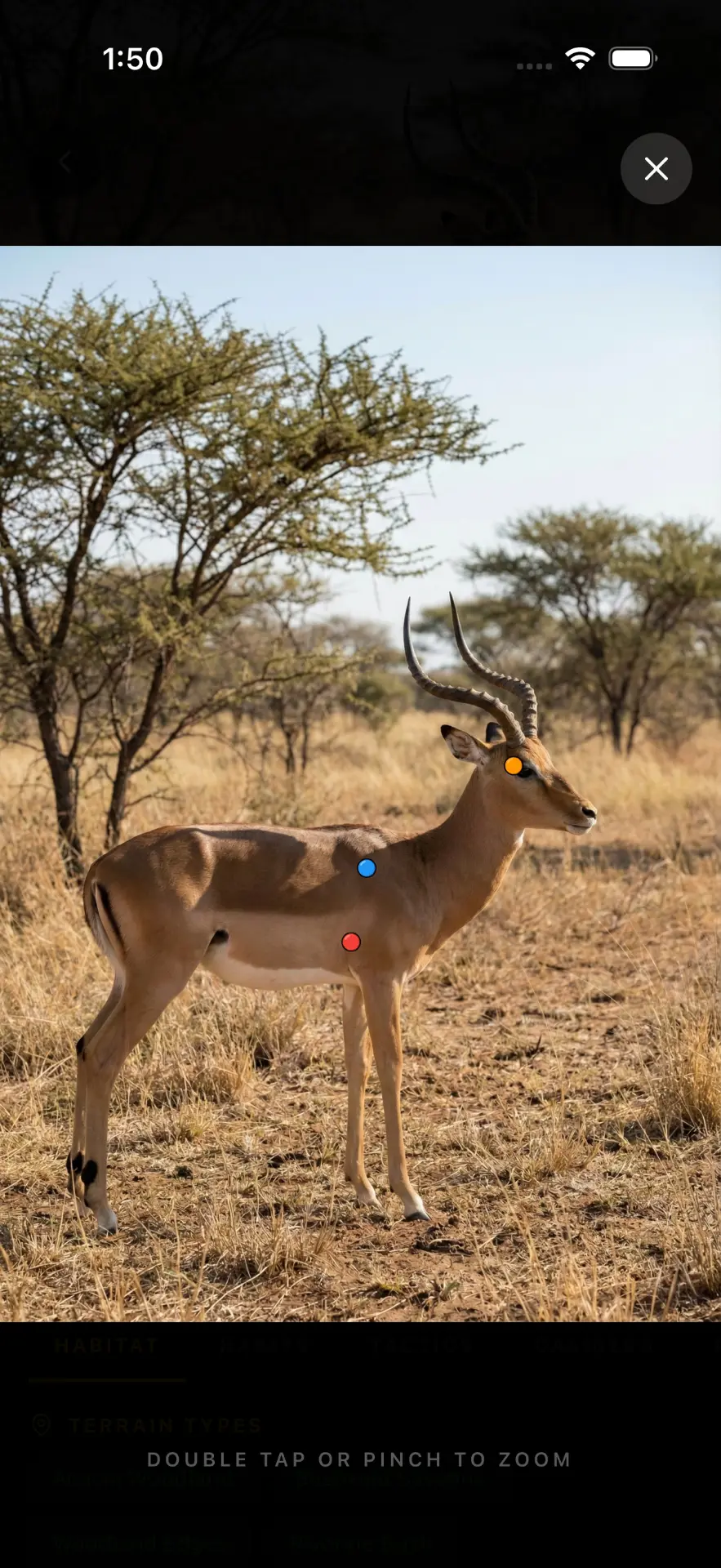
Hold on the front leg line, a third of the way up from the bottom of the chest, or slightly further forward to take the shoulder joint as well as the lungs. Long fur, especially on a fall bear, makes the body look far larger and higher than the frame beneath. The chest cavity is much smaller than the silhouette.
Quartering and other angles
Quartering away, aim for the far front leg so the bullet crosses the lungs and breaks the opposite shoulder. Quartering to, enter at the point of the near shoulder. Do not wait for a perfect broadside while the bear is closing; take the shoulder shot the bear offers.
Do not
Do not take a frontal head shot on a grizzly. The skull is angled and thick, and the brain is small and set back behind the sloping forehead. Never follow a wounded bear into alder or willow alone.
Where they live and the typical miss
Found in Alaska, western Canada and the northern Rockies, often along salmon rivers and open tundra. The typical miss is high because of long fur on the shoulders and hump, followed by a bear that runs into cover.
Keep shooting
Brown bears can absorb hits that would drop other game. Guides expect the hunter to keep shooting until the bear is down, and to cover it with a rifle until it is confirmed dead.
Hide and bullets
Use heavy, tough bullets built for bone. A light, fast-expanding bullet that breaks up on the shoulder is one of the classic causes of a wounded grizzly.