
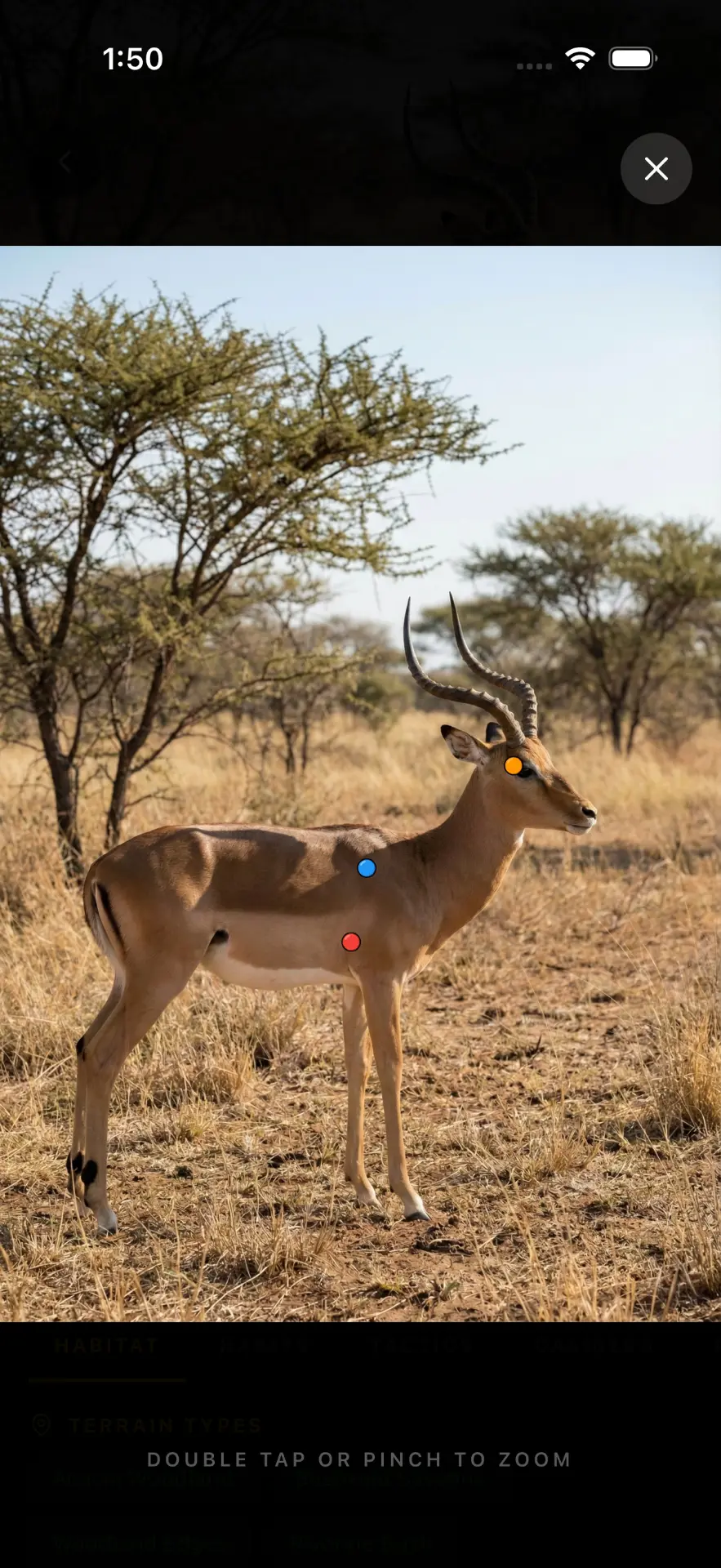
Broadside
Side brain shot: the brain lies just in front of the ear canal, roughly level with the line between the eye and the ear hole. Hold about one hand-width in front of the ear opening, on that line. Heart shot: the heart sits low and forward in the chest, on the line of the front leg. Hold on the back edge of the near leg, about a third of the way up from the brisket. The lungs sit above and behind it and are a larger, more forgiving target than the brain.
Quartering and other angles
Frontal brain shot: on a bull facing you with the head level, the brain is well behind the forehead. The aim point on the skin is on the centre line of the trunk, between the eyes and the tusk bases, usually around the deepest trunk wrinkles, depending on how the head is held. Raised head, aim lower. Lowered head, aim higher. On quartering angles, picture the brain between the ear holes and aim so the bullet path passes through it. The mark on the skin moves with the angle; the brain does not.
Do not
Do not use expanding bullets for brain shots, and do not shoot at the forehead bulge. Elephant need heavy-for-caliber solids with straight-line penetration through several feet of bone and sinus. Legal minimum calibers vary by country, so check the rules for your area before the hunt.
Where they live and the typical miss
Hunted in Southern, Central and East Africa, in mopane woodland, riverine forest and dense jess. The typical miss is a frontal shot placed too high, into the sinus cavities above the brain. It stuns or turns the bull but does not kill.
The stunned bull
A brain shot that just misses can drop an elephant, which then gets up again. Every downed elephant gets an insurance shot to the brain or heart before anyone walks up to it.
Tracking and range
Elephant are usually tracked on foot and shot at 15 to 30 metres in thick cover. At that range the herd's position and the wind decide the shot as much as your marksmanship.