Broadside
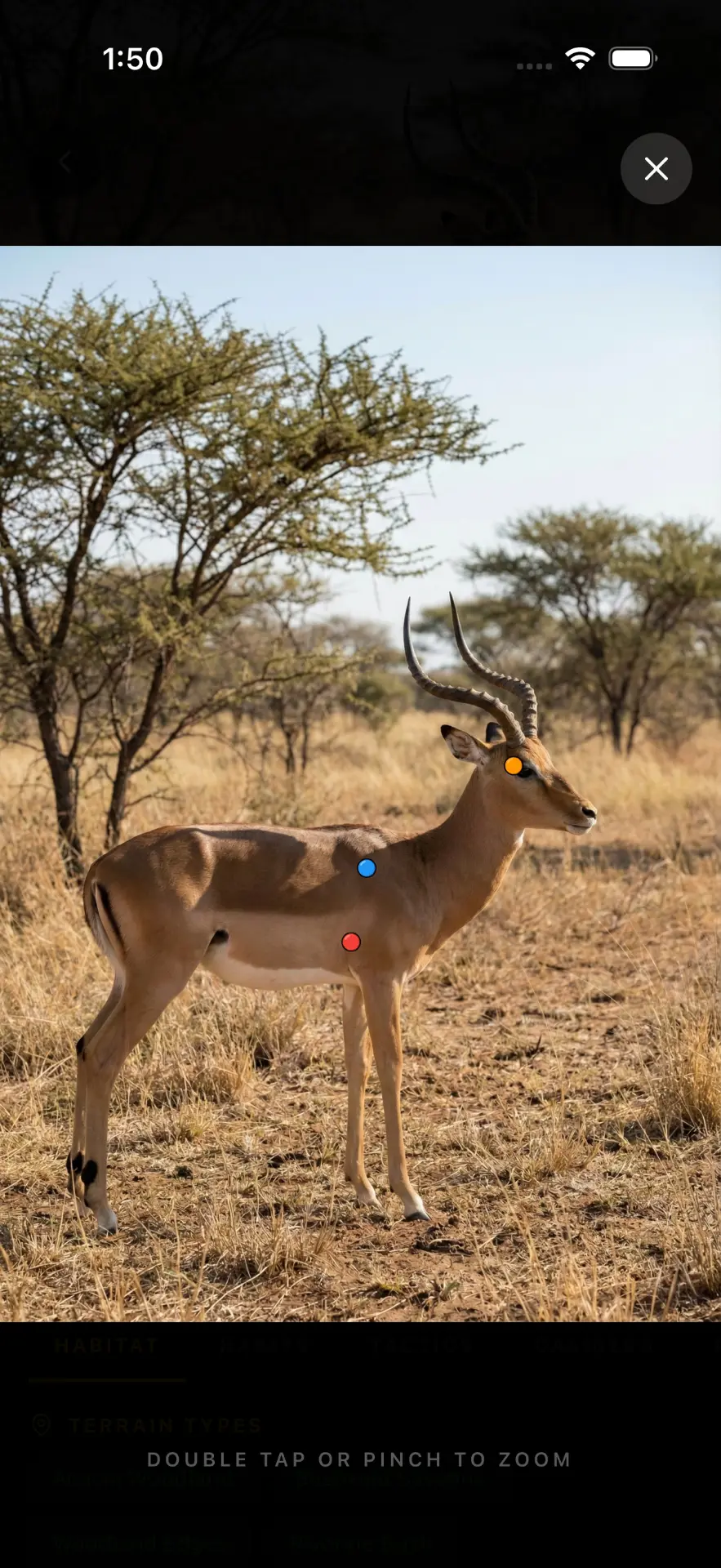
Hold on the back line of the near front leg, a third of the way up from the brisket. Elk lungs are large and extend forward under the shoulder blade, so a rifle bullet through the shoulder still reaches them. Bowhunters should stay tight behind the shoulder and avoid the heavy scapula.
Quartering and other angles
Quartering away, aim for the far front leg; the bullet or arrow enters behind the near ribs and crosses both lungs. Quartering to, the entry is the point of the near shoulder, which needs a tough bullet that will not break up on the joint.
Do not
Do not take a hard quartering-to shot on a bull with a light or fragile bullet, and do not shoot across a drainage without ranging it. Misjudged distance and angle cause more wounded elk than a bad hold.
Where they live and the typical miss
Hunted across the Rocky Mountain West and the Pacific Northwest, with restored herds in states such as Kentucky and Pennsylvania. The typical miss is high over the lungs at long range, or back into the paunch on a bull that was quartering more than it looked.
Long shots across drainages
Elk are often shot at long range across open slopes. Range the animal, account for the angle, and hold on the front leg line. Elk lungs are large, but the bull's hide, hair and shoulder bone punish marginal bullets.
After the shot
A lung-shot elk often runs 100 yards or more before going down. Watch where it goes, mark the last spot you saw it, and give it time before following up.