Broadside
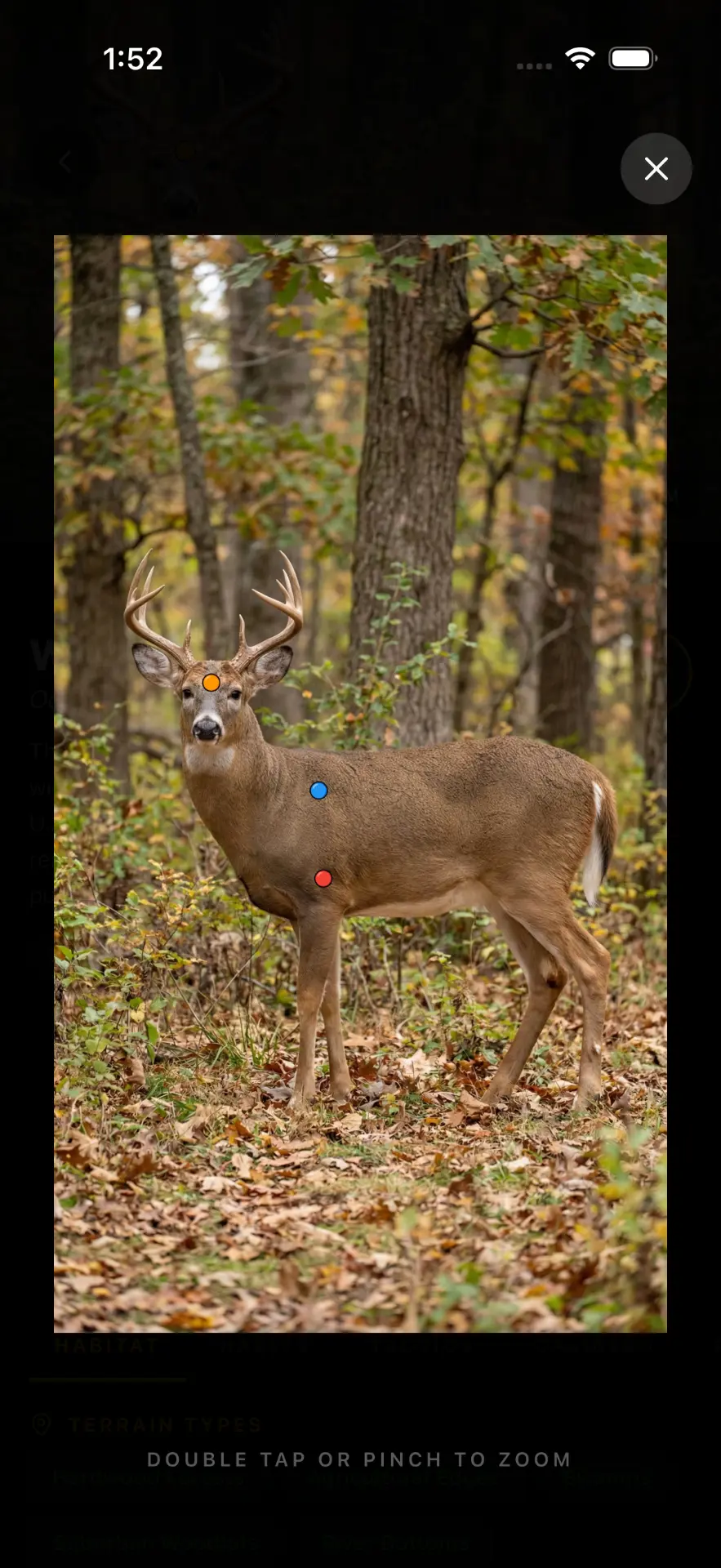
Follow the back edge of the near front leg up about a third of the body depth and hold there. That puts the shot through both lungs with the heart just below. With the near leg forward the heart is uncovered; with it back, the shoulder blade and leg bone cover the front of the lungs.
Quartering and other angles
Quartering away, aim so the shot exits through the far front leg; the entry moves back toward the last ribs. Quartering to, a rifle bullet can enter at the point of the near shoulder, but bowhunters should pass because the shoulder and brisket block the vitals.
Do not
Do not take a straight-down shot directly under a treestand; the spine and shoulder blades cover the vitals and a single-lung hit is common. With a bow, do not shoot an alert, tensed deer, which can drop at the sound of the shot and send the arrow high.
Where they live and the typical miss
Found across most of the United States, southern Canada and south into Mexico and Central America, from farmland edges to big woods and river bottoms. The typical bowhunting miss is high, from using the line-of-sight yardage on a steep treestand shot; with a rifle it is back, into the liver, on a deer that looked broadside but was quartering.
Treestand angles
From a stand 15 to 20 feet up, a deer at close range is a steep downward shot. Hold slightly higher on the near side than broadside, picturing the exit low behind the far leg, so the bullet or arrow passes through both lungs.
Bow versus rifle
With a bow, avoid the shoulder blade entirely: wait for the near leg to step forward and hold tight behind it. A rifle bullet tolerates the shoulder; a broadhead often does not.
After the shot
A double-lung deer rarely goes more than 100 yards. A liver-hit deer usually beds within a few hundred yards and needs several hours before you follow; a gut hit needs longer, often overnight.